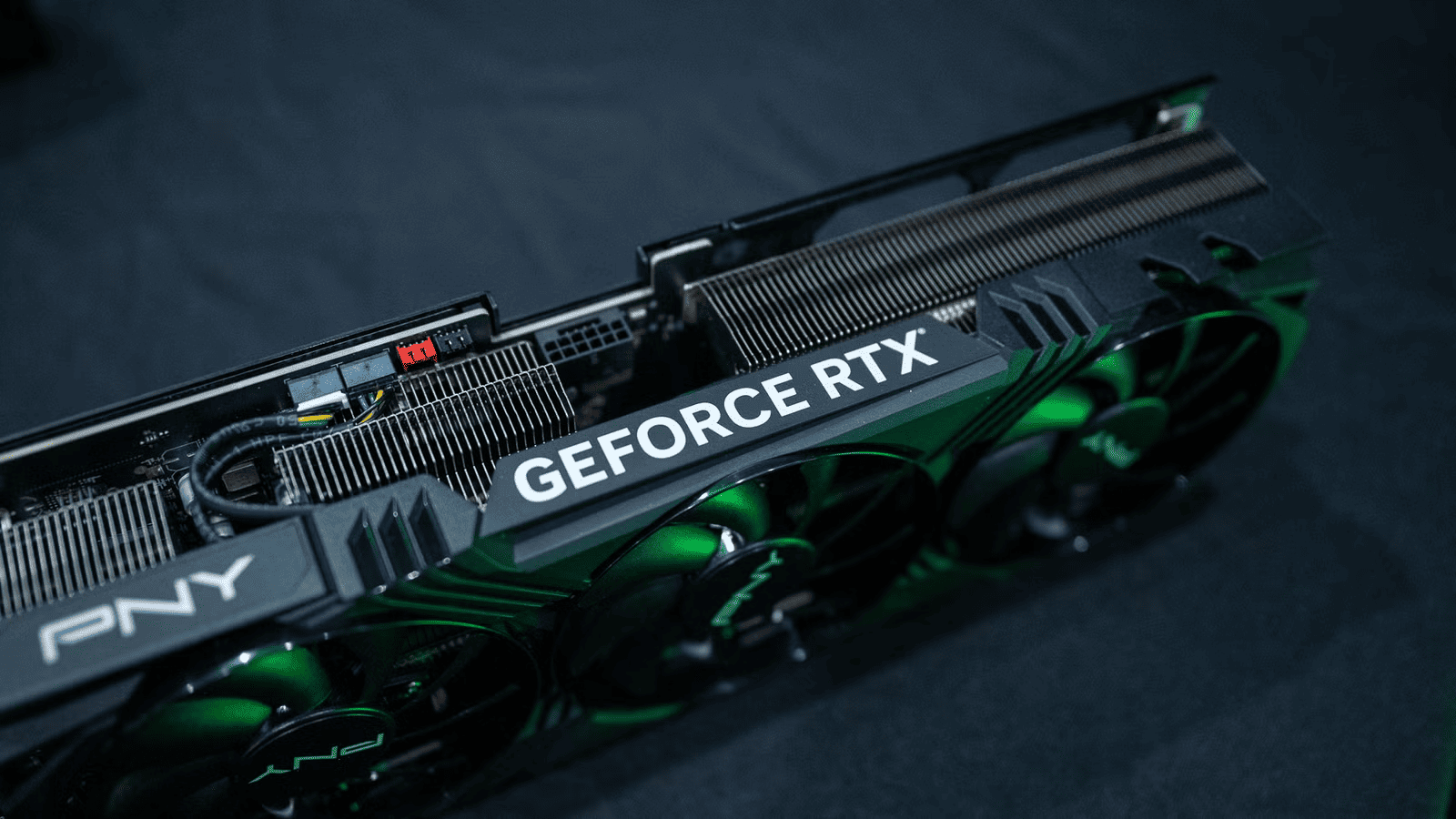
The cloud GPU bill arrived. It’s three times the original budget.
This isn’t a billing error. It’s a predictable outcome, stemming from a pricing model designed to obscure its true costs—until switching vendors becomes painful.
The advertised price for cloud GPUs—the hourly rate on the marketing page—rarely reflects the actual cost. For many enterprise AI teams running production workloads on major cloud providers, the effective cost is two to three times the advertised price, once hidden multipliers are factored in.
Understanding where this gap comes from is the first step to closing it.
The Three Hidden Cost Multipliers
1. Egress Fees: A Tax on Enterprise Data
Cloud networks charge for data leaving the vendor’s environment. This includes data transfer to the public internet, between regions, and often between services.
For AI workloads, data movement is constant:
- Training data ingestion storage
- Model checkpoints and gradients exchanged between nodes
- Evaluation results, logs, and artifacts exported to downstream systems
For a mid-sized AI team processing approximately 10 TB of training data per month, storage and egress fees alone can reach tens of thousands of dollars—expenses that don’t appear in the GPU hourly rate.
Major hyperscalers typically charge around $0.08–$0.12 per GB for standard egress, with tiered pricing based on volume, region, and destination service. For distributed training across multiple regions, these fees accumulate quickly, becoming difficult to predict precisely.
So fixed-rate, zero-egress pricing isn’t just a budgeting convenience. It’s usually the difference between predictable infrastructure costs and constant billing shocks.
2. Virtualization Overhead: A Performance Tax
Most cloud GPU offerings sit behind a hypervisor—a software layer that multiplexes hardware across multiple virtual instances. This design is efficient for the provider. For intensive AI training, it effectively serves as a performance tax.
Virtualization overhead typically reduces effective GPU throughput by approximately 10–15%, depending on workload and platform. On a single GPU, this loss is unpleasant. On a 64-GPU training cluster, it’s equivalent to losing 6–10 GPUs of compute capacity while still paying for 64.
Overhead manifests as:
- Reduced raw throughput, increasing training time
- Additional latency for distributed workloads, as inter-GPU communication crosses the hypervisor
For time-sensitive training and large-scale inference, both effects translate to longer runtimes and higher costs.
Bare-metal GPU access—direct hardware access without a hypervisor—eliminates this performance tax and allows teams to fully utilize the hardware they pay for.
3. Reserved Capacity Complexity: A Pricing Maze
Hyperscalers offer complex pricing structures:
- On-demand instances: Flexible but expensive
- Reserved instances: Cheaper but require long-term commitments
- Spot instances: Lowest nominal rate, but subject to interruption
- Savings plans and credits: Discounts tied to specific consumption levels or terms
The result is a pricing maze optimized for financial engineering rather than operational transparency. Many enterprises end up in suboptimal positions—paying on-demand rates for workloads that should be reserved, or reserving capacity that remains underutilized.
Industry analysts repeatedly show that poor reserved instance and savings plan optimization can increase overall cloud compute spend by 30–40% over optimal—entirely due to pricing structure complexity.
Real Calculation: Actual Costs for 8x H100
Consider a common enterprise AI configuration: 8x NVIDIA H100 GPUs running continuously for one month (~720 hours).
On a major hyperscaler:
- GPU compute: 8x H100 instances (e.g., AWS p5.48xlarge) priced at approximately $98.32/hour, or ~$12.30 per GPU-hour. Over one month, GPU compute alone is approximately $70,848 ($98.32 × 720).
- Egress: Transferring 100 TB of data at typical egress rates of $0.08–$0.09 per GB adds approximately $8,000–$9,000 per month.
- Storage: Persistent storage for training datasets, checkpoints, and logs, at $0.02–$0.08 per GB per month, can easily add thousands depending on retention policies.
- Performance overhead: Virtualization causing 10–15% performance loss means paying for eight GPUs while actually getting roughly seven.
All in, an 8-GPU cluster on a hyperscaler can easily exceed $80,000 per month.
On a specialized GPU cloud with fixed-rate, bare-metal pricing:
- GPU compute: H100 pricing from specialized and emerging cloud providers typically ranges from $2.49–$4.76 per hour, with some platforms and markets as low as approximately $2–$3. At $2.50 per GPU-hour, 8x H100 running 720 hours is approximately $14,400 per month.
- Egress: Many bare-metal and specialized GPU providers bundle unmetered or fixed-rate networking, effectively reducing marginal egress costs to $0.
- Storage: Typically simplified and bundled, or priced more transparently relative to GPU usage.
The gap between approximately $80,000 on hyperscalers and approximately $14,400 on specialized GPU clouds—approximately $60,000–$70,000 per month, or over $700,000 per year—isn’t a minor procurement optimization at this scale. It’s a strategic decision about whether your AI budget funds compute capacity or vendor profit margins.
Why Enterprises Still Stay with Hyperscalers
If the economics are this obvious, why do so many enterprises continue running heavy AI workloads on hyperscalers?
Several structural reasons keep large organizations in place:
Familiarity and procurement inertia. Enterprise procurement processes are built around existing hyperscaler relationships. AWS, Azure, and GCP are already approved vendors with master service agreements (MSAs), security assessments, and legal frameworks in place. Adding a new vendor triggers new due diligence, which takes time.
Bundled services. Hyperscalers offer integrated ecosystems: storage, networking, databases, managed ML platforms, identity and access management, and compliance tools—all under one contract. Teams deeply embedded in these services face significant switching costs.
Perceived risk. Specialized GPU vendors and emerging clouds are newer, less familiar to enterprise IT and risk teams in many cases. Stepping outside the big three triggers additional scrutiny, audits, and risk assessments.
These considerations are real. However, none of them justify indefinitely paying three to five times market rates for pure GPU workloads.
What High-Performing Teams Do
The most effective enterprise AI teams don’t view hyperscalers and specialized GPU vendors as mutually exclusive choices. They strategically combine both.
A common pattern:
- Hyperscalers handle workloads requiring deep integration with managed services: data warehouses, identity systems, analytics stacks, compliance-sensitive processing.
- Specialized GPU clouds handle compute-intensive training and inference, where raw performance and cost efficiency are the dominant factors.
This dual-vendor approach captures the best of both worlds:
- Using hyperscaler ecosystem depth and existing controls where they genuinely add value
- Using fixed-rate pricing, bare-metal access, zero egress, and simpler economics where GPU spending concentrates
For many enterprises, training and inference workloads represent the majority of GPU spend. For these workloads, the case for specialized providers is now straightforward: clear pricing, full hardware performance, and no pricing maze to navigate.
In this model, engineering teams focus on model performance and product delivery, not interpreting complex cloud billing dashboards.
Providers like TW Compute operate precisely in this space, offering bare-metal GPU clusters with hundreds of thousands of GPUs across 200+ global locations, with fixed-rate pricing and zero egress fees.